
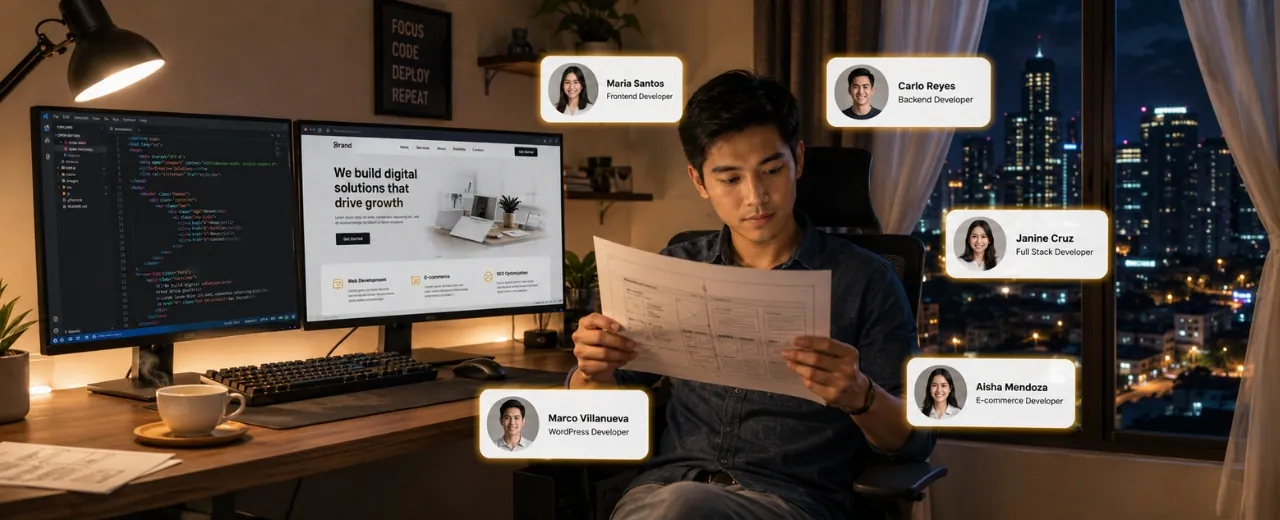
Why Hire a Filipino Web Developer
The Philippines has built one of the strongest developer talent pools in Asia over the past decade. Filipino web developers are consistently rated highly by international clients for their English communication skills, strong technical training, and genuine commitment to delivering quality work. The country produces tens of thousands of IT and computer science graduates annually, many of whom enter the freelance market with competitive technical skills and a strong work ethic.
Beyond the talent, the value proposition is compelling. A mid-level Filipino web developer typically charges $15 to $25 per hour for quality work that would cost $60 to $100 per hour in the US, UK, or Australia. For project-based work, the savings are even more significant. Businesses that have made the shift to hiring Filipino developers consistently report that the quality-to-cost ratio is among the best available anywhere in the world.
Cultural fit also plays a role. Filipino professionals are deeply familiar with Western work culture, communication norms, and business expectations. They are accustomed to working with international clients, adapting to different time zones, and communicating proactively about project progress and blockers.
Worth knowing: Filipino developers tend to be particularly strong in WordPress, PHP, React, and e-commerce development. If your project falls in any of these areas, the talent pool available to you is exceptionally deep and experienced.
Types of Web Developers and What They Do
Before you start looking, it helps to know exactly what type of developer your project actually needs. Hiring a backend developer for a frontend task, or a WordPress specialist for a custom React application, wastes both time and money.
| Developer Type | What They Build | Best For |
|---|---|---|
| Frontend Developer | User interfaces, visual layouts, interactive elements | Website redesigns, landing pages, UI improvements |
| Backend Developer | Server logic, databases, APIs, authentication | Web applications, custom platforms, API integrations |
| Full Stack Developer | Both frontend and backend | Complete web applications, startups, MVPs |
| WordPress Developer | WordPress sites, themes, plugins, WooCommerce | Business websites, blogs, e-commerce on WordPress |
| E-commerce Developer | Shopify, WooCommerce, custom online stores | Online stores, product catalogs, payment integration |
If you are not sure which type you need, describe your project outcome rather than the technical role. A good developer will tell you what type of expertise your project actually requires.
Tech Stacks Filipino Developers Commonly Work With
Filipino web developers are proficient across a wide range of modern technologies. Understanding the most common tech stacks helps you evaluate whether a candidate's skills match your project requirements.
Frontend Technologies
- HTML, CSS, JavaScript - The foundational web technologies every frontend developer must know
- React.js - The most popular JavaScript framework for modern web applications
- Vue.js - A lighter alternative to React, popular for medium-complexity projects
- Tailwind CSS - A utility-first CSS framework widely used in modern Filipino developer projects
Backend Technologies
- PHP and Laravel - Extremely popular among Filipino backend developers, especially for enterprise and CMS projects
- Node.js - Growing rapidly in the Filipino developer community for real-time applications
- Python and Django - Common for data-heavy applications and AI-integrated platforms
- MySQL and PostgreSQL - The most common database technologies used by Filipino developers
CMS and E-commerce Platforms
How to Evaluate a Web Developer's Portfolio
A portfolio is the most important thing you will review when hiring a web developer. But knowing what to look for goes beyond whether the websites look nice. Here is a practical framework for evaluating developer portfolios.
Check Live URLs First
Always visit the actual live websites in the portfolio, not just screenshots. Screenshots can be taken from templates or other developers' work. A live URL that you can test personally is the only reliable evidence of actual work done. Check loading speed, mobile responsiveness, and whether the site actually functions correctly.
Look for Relevant Project Types
A developer who has built five e-commerce sites is a better hire for your Shopify project than one who has built twenty blogs. Match the portfolio to your specific project type. Do not be distracted by volume if the work is not relevant to what you need.
Check GitHub if the Role is Technical
For backend or full stack roles, ask for a GitHub profile. A developer's commit history, code quality, and open source contributions tell you significantly more about their actual technical ability than a portfolio of finished websites. Look for recent activity, readable code, and meaningful project contributions.
Ask About Their Specific Role
Many portfolio websites are agency work where the developer was one of several people involved. Always ask what specific role they played in each portfolio project. Did they build the entire thing or just the contact form? The answer matters significantly for evaluating their actual capability.
Questions to Ask Before Hiring
The interview or pre-hire conversation is your best opportunity to assess fit before committing. Here are the most important questions to ask every web developer candidate:
1Can you walk me through a recent project from brief to delivery? This reveals their process, communication style, and problem-solving approach. Listen for how they handle client feedback, timeline challenges, and technical obstacles.
2What would you do if you encountered a technical problem you could not solve? A good developer will describe their research process, community resources, and escalation approach. A red flag is any answer that suggests they would either guess their way through or go silent.
3How do you handle project scope changes? Scope creep is one of the most common causes of budget overruns and project failures. You want a developer who can clearly articulate how they manage change requests and communicate additional costs.
4What is your availability and preferred communication method? Time zone alignment, response time expectations, and communication tools like Slack or email should be aligned before work begins.
5Can you provide references from previous clients? A confident and experienced developer will have no hesitation providing references. Reluctance here is worth noting.
6Who owns the code and files after the project is complete? Establish IP ownership clearly before work begins. For a detailed guide on contracts and ownership, see our Contracts and Legal Protection When Hiring International Freelancers guide.
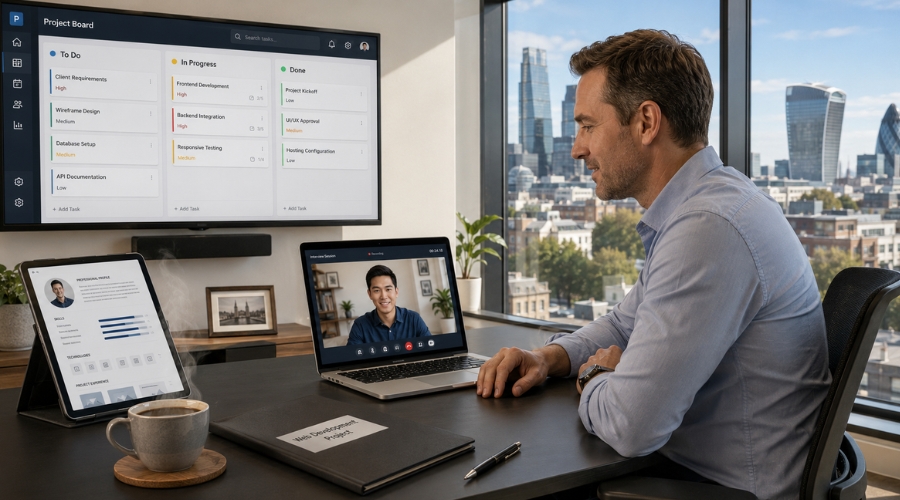
A brief pre-hire conversation that covers the right questions can save you from weeks of frustration and budget overruns down the line.
Filipino Web Developer Rate Expectations for 2026
Understanding current market rates helps you set a realistic budget and identify candidates who are either overpriced or suspiciously underpriced. The following rates are based on current market data for Filipino web developers working with international clients.
| Experience Level | Hourly Rate (USD) | Project Rate Example |
|---|---|---|
| Junior (0 to 2 years) | $8 to $15/hr | Simple WordPress site: $300 to $600 |
| Mid-Level (2 to 5 years) | $15 to $25/hr | E-commerce site: $800 to $2,000 |
| Senior (5+ years) | $25 to $50/hr | Custom web application: $3,000 to $10,000+ |
| Specialist (React, Laravel, etc.) | $30 to $60/hr | Complex platform: $5,000 to $20,000+ |
Be cautious of rates below $8/hr: While very low rates can seem attractive, they often indicate either a very junior developer still learning on the job, or someone misrepresenting their skills and experience. For any project that matters to your business, the short-term savings are rarely worth the risk of poor quality, missed deadlines, or incomplete deliverables.
For a comprehensive overview of what to expect when budgeting for Filipino freelancers across all skill categories, see our Filipino Freelance Rates: What to Expect to Pay in 2026 guide.
Red Flags When Hiring a Filipino Web Developer
Most Filipino web developers are professional, reliable, and genuinely skilled. But like any hiring process, there are warning signs worth knowing before you commit budget and time to a candidate.
Where to Find Verified Filipino Web Developers
Knowing where to look is as important as knowing what to look for. Here are the most reliable sources for finding quality Filipino web development talent.
Freelance Marketplaces
Freelance platforms with verification systems and built-in review mechanisms significantly reduce the risk of hiring unknown developers. Look for platforms that verify freelancer identities, display genuine client reviews, and offer some form of dispute resolution or payment protection.
Zinn Hub is a Filipino-first freelance marketplace with a dedicated programming and tech category where you can browse verified Filipino web developers, compare their portfolios and rates, and post your project directly to attract qualified candidates. For buyers new to the platform, the First Order Free campaign currently makes it possible to try a verified developer with zero financial risk on your first hire.
Professional Networks
LinkedIn is a reliable source for finding senior Filipino web developers with verifiable work histories. The ability to see endorsements, recommendations, and employment history adds a layer of credibility that anonymous job board profiles do not provide.
Referrals from Other Buyers
The most reliable hires often come from referrals. If you know other business owners who have successfully hired Filipino web developers, a direct referral carries more weight than any platform profile or portfolio.
Pro tip: For your first hire, consider starting with a small paid test project before committing to a larger engagement. A $100 to $200 test task that mirrors your actual project requirements tells you more about a developer's skills, communication, and reliability than any portfolio or interview.
How to Onboard a Remote Filipino Web Developer
A smooth onboarding process sets the foundation for a successful working relationship. Here is what to establish before work begins:
- Written scope of work: Document exactly what is being built, what constitutes completion, and how revisions will be handled. Ambiguity at the start creates disputes at the end.
- Access and credentials: Provide all necessary access to hosting accounts, domain registrars, existing codebases, and third-party services through a secure password manager. Never share credentials over email or chat.
- Communication cadence: Agree on how often you will have check-ins, what tools you will use, and what the expected response time is for both parties.
- Milestone structure: Break larger projects into defined milestones with payment tied to delivery. This keeps both parties accountable and reduces risk on both sides.
- Cultural context: Filipino professionals tend to be collaborative and respectful in communication. Direct and clear feedback is appreciated. For more on working effectively with Filipino freelancers, see our Cultural Guide for Foreign Buyers.
Frequently Asked Questions
How much does it cost to hire a Filipino web developer?
Rates vary significantly based on experience and specialization. Junior developers typically charge $8 to $15 per hour while mid-level developers charge $15 to $25 per hour. Senior and specialist developers can charge $30 to $60 per hour. For project-based work, a simple WordPress business site might cost $300 to $800 while a custom web application can range from $3,000 to $20,000 or more depending on complexity.
Do Filipino web developers work in my time zone?
Most experienced Filipino web developers who work with international clients are flexible about time zone overlap. The Philippines is in PHT which is UTC plus 8, meaning there is natural overlap with Australian and Asian business hours. For US and European clients, many Filipino developers are willing to adjust their working hours for meetings and check-ins while completing independent work during their own daytime hours.
What is the best way to pay a Filipino web developer?
Wise and Payoneer are the most widely used and cost-effective payment methods for paying Filipino freelancers internationally. Both offer competitive exchange rates and low fees. PayPal is also widely accepted but carries higher transaction fees. Always use a trackable payment method that creates a clear record of each transaction for both parties.
Should I hire a Filipino web developer directly or through an agency?
Direct hiring gives you more control, lower costs, and a direct relationship with the person doing the work. Agency hiring offers more accountability and easier replacement if a developer leaves, but comes at a significant premium. For most small to medium business projects, direct hiring through a verified freelance platform offers the best balance of quality, cost, and accountability.
How do I know if a Filipino developer's portfolio is genuine?
Always visit live URLs rather than relying on screenshots. Ask specific questions about each portfolio project including what they personally built, what the brief was, and what challenges they faced. For technical roles, request a GitHub profile and check their commit history. Genuine developers will answer these questions confidently and in detail.
What should a web development contract include?
At minimum, a web development contract should cover the scope of work and deliverables, project timeline and milestones, payment terms and schedule, intellectual property ownership, revision policy, and termination conditions. For a detailed guide on contracts when working with international freelancers, see our Contracts and Legal Protection guide.
Is it safe to hire a Filipino web developer I have never met in person?
Yes, with the right precautions. Use a verified freelance platform with a review system, start with a small paid test project before committing to a larger engagement, use a written contract for all work, and structure payments around milestones rather than paying everything upfront. Thousands of international businesses successfully hire Filipino web developers remotely every day using these basic precautions.
Ready to Find Your Filipino Web Developer?
Zinn Hub connects you directly with verified Filipino web developers across every specialization, from WordPress and Shopify to React, Laravel, and custom web applications. Browse portfolios, compare rates, and post your project today.
Post Your Web Development Project on Zinn Hub