
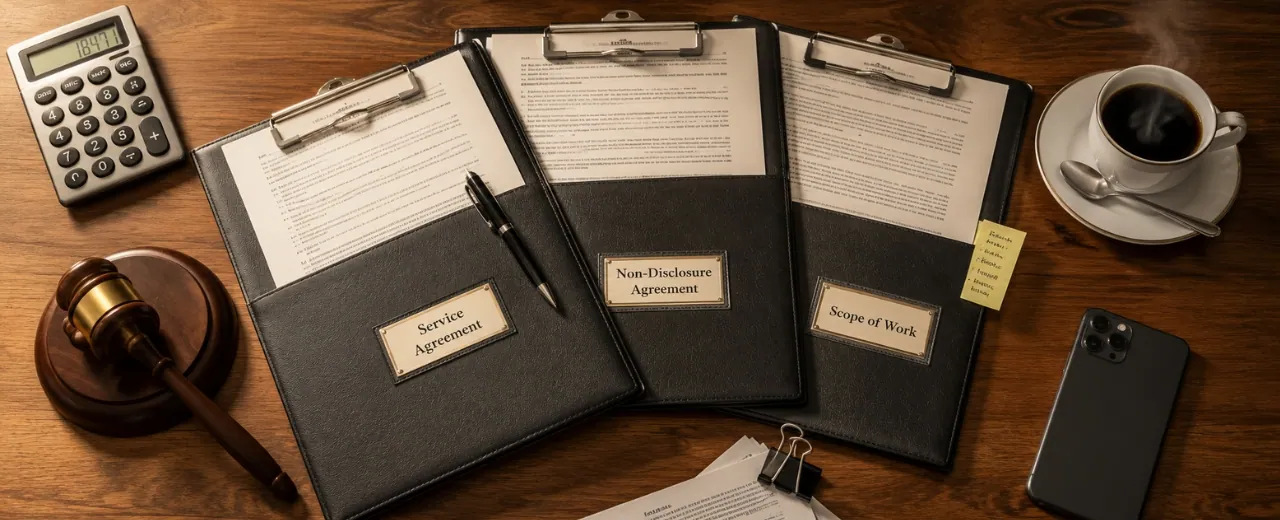
Why Contracts Matter in International Hiring
Hiring a freelancer online is fundamentally different from hiring a local employee. There is no HR department, no employment law that automatically applies to both parties, and no shared legal framework that both of you operate under by default. What you do have is whatever agreement you put in writing before work begins.
A contract is not a sign of distrust. It is the opposite. A clearly written contract protects both you and your freelancer by removing ambiguity before it becomes a problem. What exactly is being delivered? When? For how much? Who owns the final work? What happens if something goes wrong? These are questions that every professional working relationship needs to answer upfront.
When you hire a Filipino freelancer specifically, it is worth understanding that the Philippines does not have a direct enforcement mechanism for international freelance contracts in the way that domestic employment law works. This means the contract itself, and the platforms you use to formalize it, become your primary protection. Getting this right from the start is significantly easier than trying to resolve disputes after the fact.
Good to know: Most professional Filipino freelancers will actively welcome a contract. It signals that you are a serious client who respects professional boundaries and understands how a proper working relationship should function. If a freelancer is reluctant to sign any form of written agreement, that is worth noting before you proceed.
Scope of Work vs Full Contract: What Is the Difference
Not every freelance engagement requires a full multi-page legal contract. Understanding the difference between a Scope of Work document and a full contract helps you choose the right level of formality for each project.
Scope of Work (SOW)
A Scope of Work is a focused document that outlines the specific deliverables, timeline, and expectations for a single project or engagement. It is practical, straightforward, and can be as simple as a detailed email or a one-page document. For shorter projects or one-time engagements, a well-written SOW is often sufficient.
A good SOW covers: what will be delivered, in what format, by when, through how many revision rounds, and at what cost. It does not need legal language to be effective. Clarity is more important than formality for smaller engagements.
Full Freelance Contract
A full contract goes further and covers the legal aspects of the working relationship: intellectual property ownership, confidentiality obligations, dispute resolution procedures, termination clauses, and governing law. For ongoing retainer relationships, projects involving sensitive business information, or engagements where the deliverables have significant commercial value, a full contract is strongly recommended.
Practical rule: If the project is under $500 and one-time, a detailed SOW is usually enough. If the project is ongoing, involves confidential information, or is worth more than $500, use a full contract. When in doubt, the fuller document always protects you better.
Key Clauses Every Freelance Contract Should Have
A freelance contract does not need to be written by a lawyer to be effective. But it does need to cover the right topics. Here are the eight essential clauses that every international freelance contract should include.
Project Scope and Deliverables
Describe exactly what the freelancer will deliver, in what format, and to what standard. Be specific. "Social media graphics" is not enough. "Ten square social media graphics in 1080x1080px PNG format for Facebook and Instagram, designed in Canva with editable source files provided" leaves no room for misinterpretation.
Timeline and Deadlines
Specify the start date, key milestone dates if applicable, and the final delivery date. Include what happens if deadlines are missed and how timeline changes should be requested and approved. Time zone clarity is important here since your deadlines should specify which time zone they apply to.
Payment Terms and Schedule
State the total project fee or hourly rate, the payment schedule, the payment method, and the currency. For international payments, specify whether the amount is in USD, GBP, AUD, or another currency. Also specify when payment is due relative to delivery, for example net 7 days after final delivery or 50% upfront and 50% on completion.
Revision Policy
Define how many rounds of revisions are included in the agreed price and what constitutes a revision versus a new request. Unlimited revisions without definition is a common source of scope creep that frustrates both parties. Two rounds of revisions based on consolidated feedback is a reasonable standard for most creative projects.
Intellectual Property Ownership
This clause states who owns the final deliverables once payment has been made. In most client-freelancer relationships, ownership transfers to the client upon full payment. This needs to be stated explicitly in writing. Without it, the default in many jurisdictions is that the creator retains the copyright even after delivering the work.
Confidentiality Obligations
If the freelancer will have access to sensitive business information, client data, proprietary processes, or unpublished content, include a confidentiality clause. This does not need to be a separate NDA for most freelance engagements. A single clause within the contract is usually sufficient for standard projects.
Termination Conditions
Specify how either party can end the contract, how much notice is required, and what payment is owed for work already completed at the time of termination. A clear termination clause protects both parties and prevents disputes over compensation for partial work.
Governing Law and Dispute Resolution
Specify which country's laws govern the contract and how disputes will be resolved. For international freelance contracts, many clients specify their own country's law as governing. Including a clause that disputes will first be attempted through negotiation, then mediation, before any legal action is a practical approach that protects both sides.
Payment Terms and Milestone Structures
How you structure payments has a significant impact on both your risk level and the freelancer's motivation. There is no single correct approach, but understanding the common structures helps you choose the right one for each engagement.
Common Payment Structures
- Full upfront payment: Rarely recommended for new client-freelancer relationships. Carries significant risk for the client if the work is not delivered as agreed.
- 50% upfront, 50% on delivery: The most common structure for project-based work. Gives the freelancer security to begin work while the client retains leverage over the final payment.
- Milestone-based payments: Best for larger or longer projects. Payment is released as specific deliverables are completed and approved. Reduces risk for both parties on extended engagements.
- Weekly or monthly retainer: Best for ongoing work. Payment is made at regular intervals for a defined scope of work or number of hours. Provides stability for both parties.
- Payment on delivery: Full payment only after all deliverables are received and approved. Works well for smaller projects but may be less attractive to experienced freelancers without an established relationship.

A clear payment structure agreed upon before work begins protects both the buyer and the freelancer and creates a foundation of trust for the working relationship.
Important: Always use a trackable payment method when paying international freelancers. Platforms like Wise, Payoneer, or PayPal provide transaction records that protect both parties in the event of a dispute. Avoid cash transfers or informal payment methods that leave no paper trail.
Intellectual Property and Ownership
Intellectual property ownership is one of the most commonly misunderstood aspects of hiring freelancers internationally. Many buyers assume that paying for work automatically transfers all rights to them. This assumption is legally incorrect in most jurisdictions.
In the Philippines, as in many countries, the creator of an original work owns the copyright by default unless there is a written agreement transferring that ownership. This means that without a clear IP clause in your contract, a freelancer technically retains copyright over the work they created for you even after you have paid for it.
The fix is simple: include a clear work-for-hire or IP assignment clause in your contract that states ownership of all deliverables transfers to the client upon receipt of full payment. Most professional Filipino freelancers will have no objection to this clause. It is standard practice in international freelance engagements.
For ongoing retainers: If you have a freelancer working with you long-term, clarify in the contract whether IP transfers automatically for all work produced during the engagement or only upon specific deliverable approval and payment. Clarity upfront prevents complicated conversations later.
Confidentiality and NDA Basics
If your freelancer will have access to client data, proprietary business information, unreleased products, financial records, or any other sensitive material, a confidentiality agreement is essential. For most freelance engagements, a confidentiality clause within the main contract is sufficient. A separate standalone NDA is typically reserved for higher-stakes engagements or situations where the freelancer will have particularly sensitive access.
What a Basic Confidentiality Clause Should Cover
- A definition of what constitutes confidential information in the context of the engagement
- The obligation not to disclose confidential information to third parties
- The obligation not to use confidential information for any purpose outside the engagement
- How long the confidentiality obligation lasts, typically one to three years after the engagement ends
- Exceptions, such as information that is already publicly available or that the freelancer knew before the engagement
Practical note: Most Filipino freelancers working with international clients are already familiar with confidentiality expectations and take them seriously. A clear clause in the contract formalizes this understanding and provides you with recourse if there is ever a breach.
Dispute Resolution for International Agreements
Disputes in international freelance relationships are relatively rare when contracts are clear and communication is good. But having a defined process for resolving disagreements is valuable precisely because it makes disputes less likely to escalate.
For most client-freelancer disputes, the most practical resolution pathway is negotiation first, followed by mediation if direct negotiation does not resolve the issue. Formal legal action across international borders is expensive, slow, and rarely practical for the amounts involved in most freelance engagements.
Using a platform with built-in dispute resolution, such as the escrow and dispute systems offered by freelance marketplaces, is one of the most practical protections available to international buyers. When payment is held in escrow and released only upon approval of deliverables, the risk of non-delivery or non-payment is significantly reduced for both parties. For a guide on platforms that offer this protection, see our Hiring Your First Filipino Virtual Assistant guide.
Free Contract Tools and Templates
You do not need to hire a lawyer to create a solid freelance contract. Several free and low-cost tools make it straightforward to create professional agreements that cover all the essential bases.
Bonsai
One of the most popular freelance contract tools available. Offers pre-built templates for common freelance engagements including design, development, writing, and consulting. Includes e-signature functionality and invoice integration.
DocuSign
The industry standard for electronic signatures. Use your own contract document and send it for e-signature through DocuSign. Both parties receive a signed copy and the process is legally binding in most countries including the Philippines.
Google Docs
A simple and accessible option for creating and sharing contract documents. Use a template from our recommended sources, customize it in Google Docs, and share it with your freelancer for review. Both parties can leave comments before finalizing.
AND.CO
A freelance business management tool that includes contract creation, invoicing, and time tracking. The contract templates are straightforward and cover the essential clauses needed for most freelance engagements.
Red Flags When a Freelancer Refuses a Contract
Most professional freelancers will welcome a contract. It protects them just as much as it protects you. But occasionally you may encounter resistance. Here is how to read the situation.
- Reluctance to sign anything written: A professional freelancer who refuses any form of written agreement is a concern. It suggests either a lack of experience with professional engagements or a desire to avoid accountability for deliverables.
- Objection to IP transfer clauses: Some objection here is normal, particularly from experienced designers or developers who license rather than assign their work. But a complete refusal to include any IP clarity is a red flag for commercial projects.
- Resistance to milestone payments: A freelancer who insists on full upfront payment with no written agreement for a new client relationship is asking you to take on significant risk. This is not a standard professional arrangement.
- Vague responses to specific contract questions: If a freelancer becomes evasive or vague when you ask specific questions about deliverables, timelines, or revisions, that evasiveness will likely continue throughout the project.
Remember: A freelancer who objects to reasonable contract terms is showing you how they will behave throughout the engagement. Professional freelancers understand that contracts protect both parties. Any significant resistance to basic written agreements before work begins is a signal worth taking seriously. For more on identifying reliable talent, see our Working with Filipino Freelancers: Cultural Guide.
Frequently Asked Questions
Is a freelance contract legally enforceable in the Philippines?
Yes, written contracts are legally recognized in the Philippines under the Civil Code. However, enforcing an international contract through Philippine courts is a complex and expensive process that is rarely practical for typical freelance disputes. This is why using platforms with built-in escrow and dispute resolution, and maintaining clear written communication throughout the engagement, are more practical protections than relying on legal enforcement.
Do I need a lawyer to write a freelance contract?
Not necessarily. For most standard freelance engagements, a well-written contract using a reputable template from tools like Bonsai or AND.CO is sufficient. You should consider involving a lawyer if the project involves significant IP value, if you are sharing highly sensitive proprietary information, or if the contract value is substantial enough that legal costs are proportionate to the protection gained.
Can I use an electronic signature on a freelance contract with a Filipino freelancer?
Yes. The Philippines recognizes electronic signatures as legally valid under the Electronic Commerce Act of 2000. Tools like DocuSign, HelloSign, and similar platforms create legally binding electronic signatures that are accepted in the Philippines and in most countries where your business operates.
What should I do if a freelancer does not deliver what was agreed in the contract?
Start by reviewing the contract to confirm that the deliverable was clearly specified and that the deadline has genuinely passed. Then communicate directly and professionally with the freelancer to understand what happened. If the issue cannot be resolved through direct communication, escalate through the platform's dispute resolution system if you are using one. Document all communication throughout the process.
Should I use a platform or hire directly when hiring a Filipino freelancer?
Both approaches work well with the right protections in place. Platforms offer built-in escrow, dispute resolution, and freelancer verification which reduces risk significantly for new hiring relationships. Direct hiring offers more flexibility and potentially lower costs but requires you to manage the contract and payment process independently. For first-time international hiring, a platform with built-in protections is generally the safer starting point.
How detailed does a Scope of Work document need to be?
As detailed as necessary to remove any ambiguity about what is being delivered. A good rule of thumb is to write the SOW as if the person reading it has no prior context about your business or the project. If a detail could reasonably be interpreted in more than one way, clarify it. The time you spend writing a detailed SOW is almost always less than the time spent resolving misunderstandings later.
What payment method should I use when paying a Filipino freelancer?
Wise and Payoneer are the most cost-effective and widely used options for paying Filipino freelancers internationally. Both provide clear transaction records, competitive exchange rates, and low fees. PayPal is widely accepted but carries higher fees. Always use a trackable payment method that creates a record of the transaction for both parties.
Ready to Hire with Confidence?
A clear contract is the foundation of every successful international freelance relationship. With the right agreement in place from the start, both you and your freelancer can focus on the work rather than worrying about what happens if something goes wrong.
For free contract templates you can customize immediately, visit Bonsai or AND.CO. For e-signature functionality, DocuSign offers a free plan that covers most standard freelance contract needs.
If you are ready to start finding skilled Filipino freelancers to hire, our Hiring Your First Filipino Virtual Assistant guide walks you through the full process from finding candidates to onboarding your first hire.